
From the Garden to the Desert

One of the first truths that confronts us in Genesis 2 is our radical dependence on God. We did not choose to exist. We do not sustain ourselves. We are formed from the dust, and to dust we shall return. Our very breath is given. Creation is not self-originating. It is received.
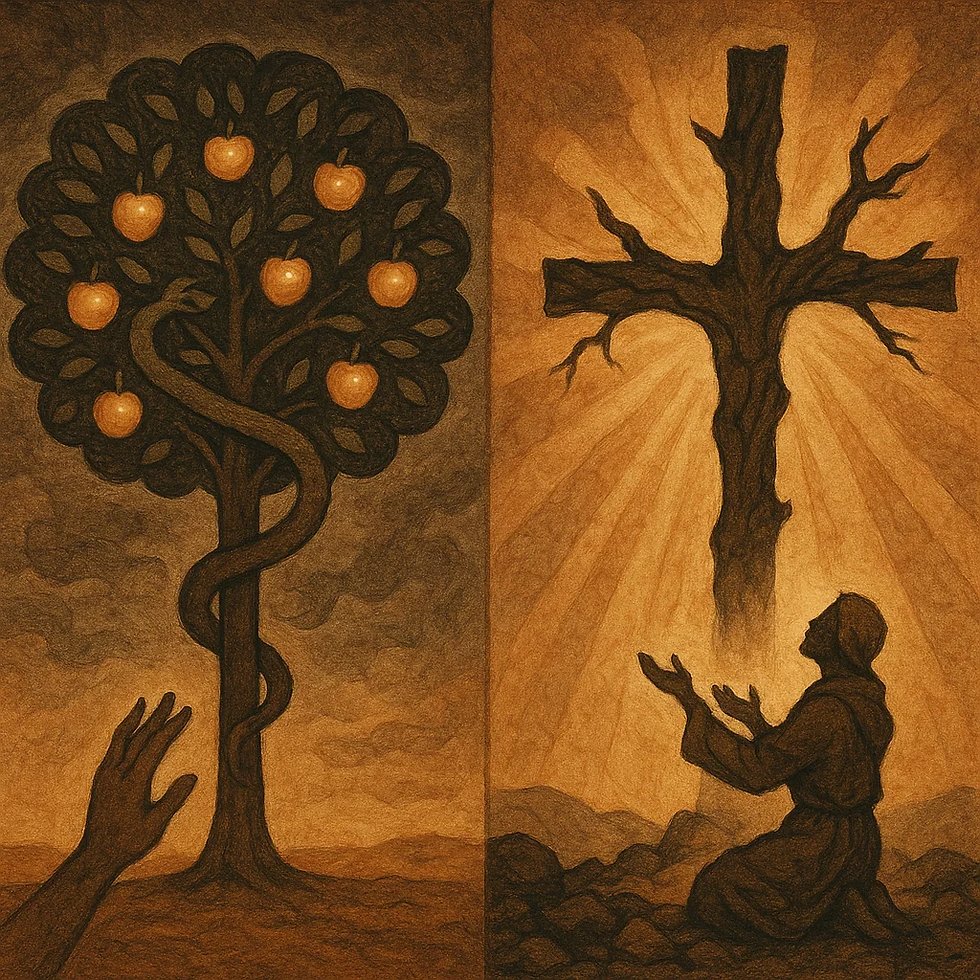
Yet almost immediately, something fractures. Instead of trusting the One who gave them life, Adam and Eve decide that they know better. The serpent does not begin with open rebellion. He begins with a subtle distortion. “You will not die. You will be like gods.”
What he does not say is this: you will be cut off from the source of life. You will come to know good and evil, not as God knows it in perfect wisdom, but through experience. You will learn it through suffering. Through shame. Through rupture.
The temptation is not merely about fruit. It is about autonomy. It is the suggestion that dependence is weakness. That God is withholding something. That we can grasp what should only be received.

Genesis tells us the fruit was good for food, pleasing to the eyes, and desirable for gaining wisdom. In other words, the body, the imagination, and the intellect are all drawn in. Appetite, possession, self-exaltation. The movement turns inward. Instead of love of God and neighbor, the human heart curves in on itself.
That is the wound. Sin is not simply rule-breaking. It is a disordering of love. And from that disorder, everything else flows.
Saint Paul tells us that sin entered the world through one man, and death through sin. Humanity has not been the same since. We feel that fracture in ourselves. We know what is right, yet we resist it. We long for goodness, yet we grasp at lesser things.
This is why we cry out for mercy.
Yet sin does not have the final word. The story does not end in Genesis 3.
Where Adam was disobedient, Christ is obedient. Where Adam grasped, Christ receives. Where Adam sought to become “like God” apart from God, Christ reveals what true sonship is: perfect trust in the Father.
Through His obedience, we are justified. That is, our relationship with God is restored. We are not merely forgiven; we are adopted. We are made sons and daughters through grace.
And we see this obedience tested in the Gospel of Matthew. Jesus goes into the desert for forty days. He fasts. He prays. He is hungry and physically weakened when the tempter comes, just as he came to Adam and Eve.
The temptations echo the same pattern.
Turn these stones to bread. It is good for food.
Throw yourself down. God will protect you.
Worship me, and I will give you power and glory.
The categories are the same: appetite, presumption, pride. Bodily desire, manipulation of God, grasping at power.
But this time the response is different.
Christ does not argue from pride. He does not grasp. He does not assert autonomy. He entrusts Himself to the Father. He answers with Scripture. He refuses to turn stones into bread because man does not live by bread alone. He refuses to test God. He refuses false glory.
He conquers evil not by force, but by obedience.
And this matters for us.
We do not overcome temptation by sheer willpower. We overcome by grace. But grace does not eliminate struggle. It strengthens us within it.
This is why we fast. Not because food is evil. Not because the body is bad. But because our loves must be trained. Small acts of restraint prepare us for larger battles. When we say no to something lawful, we grow in strength to say no to what is sinful.
Fasting is training in trust. It reminds us that we are dependent. It reorders our desires. It pushes back against the lie that we must grasp, consume, or exalt ourselves to be fulfilled.
Genesis shows us the wound. The desert shows us the remedy.
And the remedy is obedience rooted in love.


Comments